


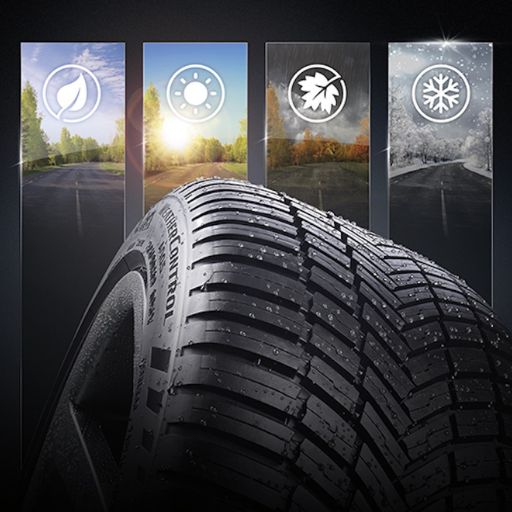
Choosing the right tyres in the UK can be confusing. You might wonder if it’s worth switching between summer and winter tyres or if one set can handle every season. With weather that changes from rain to frost within a few days, it’s easy to see why many drivers are turning their attention to all-season tyres.
In this guide, you’ll learn how all-season tyres perform in the UK’s mixed climate, how they compare with summer and winter tyres, what they cost, and what tyre experts recommend for year-round driving.
What Are All-Season Tyres and How Do They Work?
All-season tyres are designed to give you steady performance all year without switching between summer and winter sets. They are a combination of key features of both, the grip and handling of summer tyres with the flexibility and traction of winter tyres
Their tread pattern has deeper grooves and more sipes (small cuts) to help grip wet and light snowy roads. The rubber compound stays flexible in mild cold but firm enough for warm conditions, so you get reliable control in most UK temperatures.
When shopping, you’ll often see M+S (Mud and Snow) or 3PMSF (Three-Peak Mountain Snowflake) symbols on the sidewall. The M+S mark shows the tyre can handle basic mud and snow, while the 3PMSF symbol means it has passed strict snow-traction tests for better winter performance.
In real driving, all-season tyres perform well on dry and wet roads and can manage light snow or frost. They’re not built for deep snow or extreme cold, but for most UK roads and weather, they provide a strong balance between safety, grip, and comfort.
In this guide, you’ll learn how all-season tyres perform in the UK’s mixed climate, how they compare with summer and winter tyres, what they cost, and what tyre experts recommend for year-round driving.
Do All-Season Tyres Suit British Weather?
The UK’s climate is a mix of mild winters, cool summers, and unpredictable rain. Temperatures usually stay above freezing, with averages around 2°C to 8°C in winter and 15°C to 25°C in summer. While heavy snow is rare, wet and cold roads are common, especially in early mornings and late evenings.
This kind of weather makes all-season tyres a smart choice for many drivers. They stay flexible in cooler temperatures and give enough grip on damp or lightly frosted roads. You don’t need to change tyres every season, which saves time and money without giving up everyday safety.
Still, regional differences matter. Drivers in Scotland or highland areas often face colder weather, frost, and the occasional snowfall, so winter tyres may still be better there. In southern England, where winters are milder and snow is uncommon, all-season tyres perform well throughout the year. For most UK roads, they strike the right balance between performance and practicality.
Performance Breakdown: All-Season vs Summer vs Winter Tyres
Each tyre type is built for specific conditions, and their performance changes with the weather. All-season tyres aim to balance everything, grip, control, and safety, without needing seasonal swaps. Still, they have some trade-offs. They aren’t as sharp as summer tyres in hot weather or as grippy as winter tyres on snow, but they do a solid job across most UK conditions.
Here’s a quick comparison:
Feature | Summer Tyres | Winter Tyres | All-Season Tyres |
Dry Grip | Excellent | Good | Good |
Wet Grip | Very good | Good | Good |
Snow Grip | Poor | Excellent | Fair |
Braking Distance (Cold) | Long | Short | Moderate |
Handling | Sharp | Softer | Balanced |
Comfort | Smooth | Soft | Smooth |
Cost | Lower | Higher | Medium |
Lifespan | Long in warm weather | Shorter | Balanced |
Limitations of Using All-Season Tyres
All-season tyres work well in most UK conditions, but they do have a few limits you should know before fitting them.
They lose grip and stopping power in heavy snow or very low temperatures, as their rubber isn’t soft enough to bite into icy roads. In hot summer weather, you might also notice slightly less precise handling compared to summer tyres, especially when cornering at higher speeds.
Driving aggressively all year can wear them out faster, reducing lifespan compared to using seasonal sets. They also aren’t the best match for high-performance cars, which need tyres made for sharper handling and speed stability.
For normal daily driving, all-season tyres are dependable, but for extreme cold, intense heat, or sporty driving, they won’t match the performance of specialised tyres.
Are All-Season Tyres Legal and Safe in the UK?
All-season tyres are completely legal in the UK. There’s no law that tells you which type of tyre you must use in summer, winter, or all-season. The main legal requirement is that your tyres must be safe and roadworthy, with a tread depth of at least 1.6 mm across the central three-quarters of the tyre.
All-season tyres meet the same standards used for MOT tests, and using them won’t cause any insurance issues. Most insurers only care that your tyres are in good condition and correctly fitted for your vehicle.
When choosing all-season tyres, look for the 3PMSF (Three-Peak Mountain Snowflake) marking. This symbol shows the tyre has passed strict winter performance tests and can handle cold, wet, and lightly snowy roads safely. Many top UK tyre brands include this mark on their all-season models, giving you peace of mind that they’re safe for year-round use.
How to Choose the Right All-Season Tyre for Your Car
- Picking the right all-season tyre makes a big difference in how your car handles through the year. Here’s what to look for when choosing a set:
- Look for the 3PMSF symbol: This small mountain-and-snowflake icon on the sidewall proves the tyre has passed snow-traction tests. It’s a sign the tyre is safe for winter use and fully suitable for UK weather.
- Check the correct size and speed rating: You’ll find these on your current tyre sidewall or in your car’s handbook (for example, 205/55 R16 91V). Always match the size and rating to your vehicle’s requirements for safety and performance.
- Choose trusted brands: Popular all-season models that perform well in the UK include Michelin CrossClimate 2, Goodyear Vector 4Seasons Gen-3, Continental AllSeasonContact, and Bridgestone Weather Control A005 EVO.
- Check tyre age and performance ratings: Look at the four-digit DOT code on the tyre’s side, it shows the week and year it was made (e.g., 2323 = week 23 of 2023). Also review EU label ratings for wet grip, fuel efficiency, and noise, which give you a clear idea of how the tyre performs in real driving.
- Choosing a quality, correctly rated all-season tyre gives you safer handling, better grip, and smoother performance all year across UK roads.
Are All-Season Tyres Worth the Price?
All-season tyres often cost slightly more upfront than summer tyres, but they can save you money over time. Instead of buying two separate sets, one for summer and one for winter, you only need one set that stays on all year. That means no seasonal fitting costs, no storage fees, and less time spent at the garage.
In the UK’s moderate climate, all-season tyres also wear at a balanced rate. You might replace them a little sooner than dedicated summer tyres, but the total yearly cost usually ends up lower because you’re not maintaining two sets. For most drivers who face mild winters and wet roads, all-season tyres are a practical and cost-effective option that balances performance, comfort, and long-term value.
Wrapping Up:
For most UK drivers tyre fitters recommend all-season tyres because they make perfect sense. The country’s mild winters and frequent rain suit their balanced design. They deliver dependable grip in the cold, solid handling in the rain, and comfortable performance on dry roads, all without the need to swap tyres every few months.
If you live in areas with heavy snow or long cold spells, winter tyres still offer better safety. But for everyday driving across most of the UK, all-season tyres give you a smart mix of safety, value, and year-round convenience.