Change Tyres At Home Without Losing Your Day
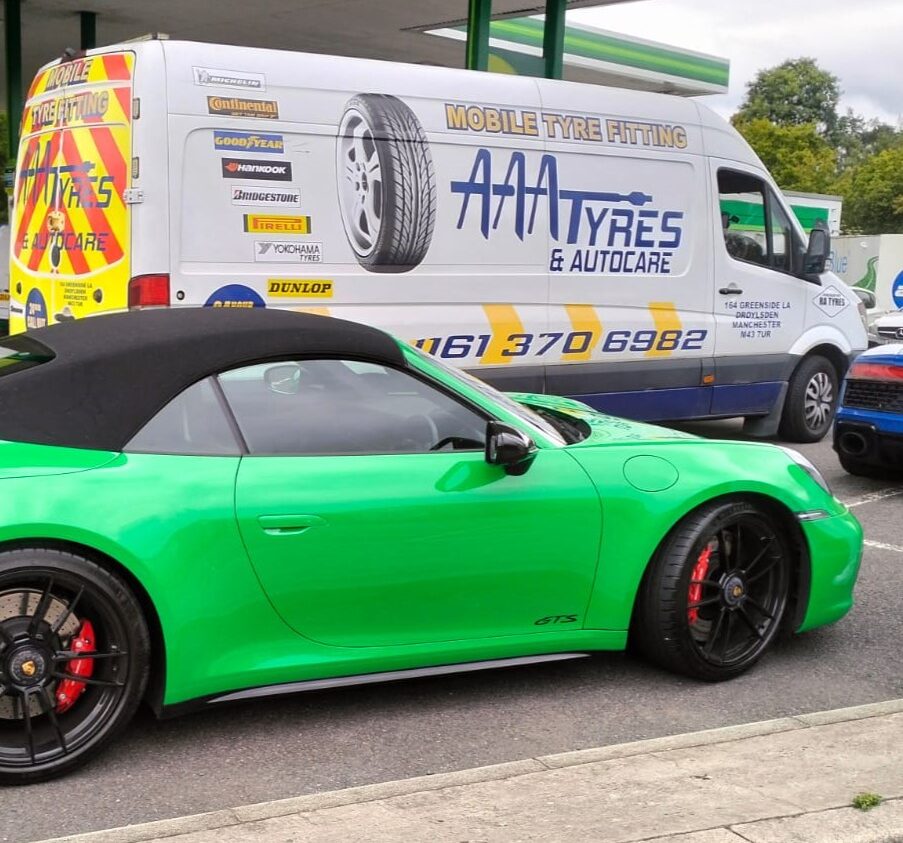
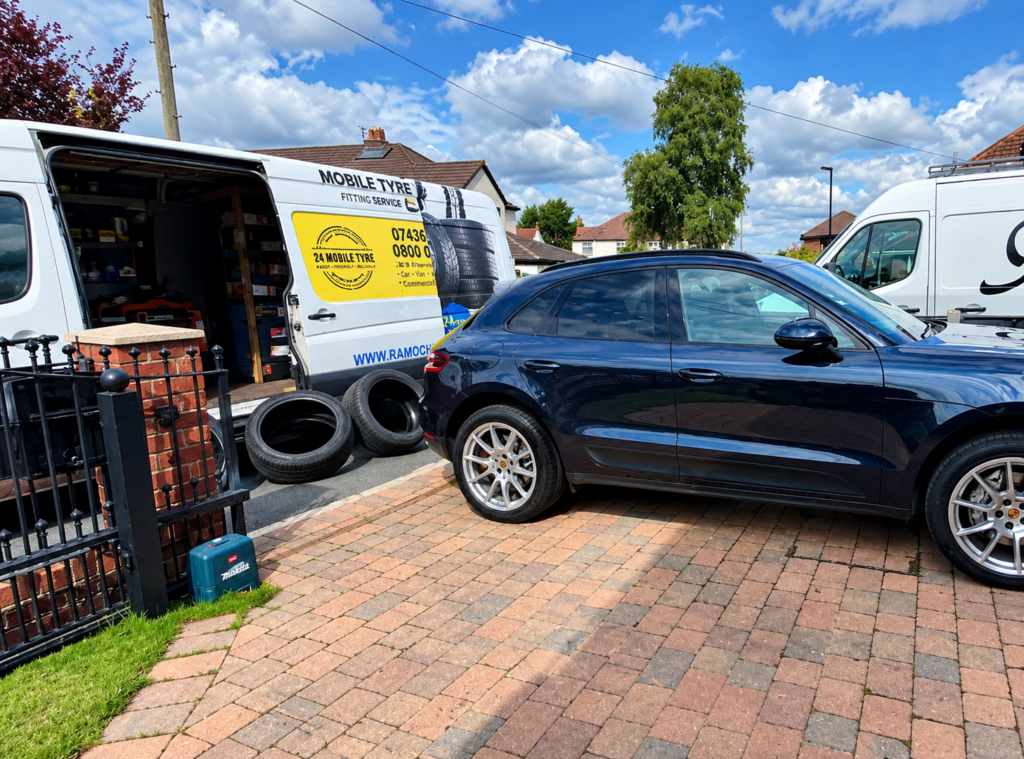
Booking a fitter to change car tyres at home is often easier than people expect. You stay inside while the work happens on the drive or the street outside. If you’d rather, we can come to your workplace or a car park while you shop. All we need is safe space around the car and your locking wheel nut key, and if that’s missing, our fitters can remove the nuts without damaging your wheels.
You’ll know the full price before we set off. Share your registration and we’ll quote for budget, mid range or premium tyres, with fitting and wheel balancing included. If the damage can be repaired, we’ll tell you, because a repair costs much less than a new tyre. That’s why so many drivers now use mobile tyre fitting in Halton rather than booking a garage slot.
Tyre Myths Halton Drivers Still Believe
“A puncture always means a new tyre.” Not true. If the damage is in the central part of the tread and the tyre hasn’t been driven flat, it can often be repaired to British Standard BS AU 159.
“1.6mm of tread is plenty.” It’s the legal minimum, but grip in wet weather drops off well before then. Many drivers replace their tyres at around 3mm.
“Tyre sealant is a permanent fix.” Sealant is only meant to get you somewhere safe. It can also make a proper repair harder, so get the tyre checked as soon as possible.
“A space saver is fine until I get round to it.” Space saver wheels are designed for short trips at lower speeds, often no more than 50mph. They’re not a long term replacement.
“Any tyre will do as long as it fits.” Tyres on the same axle should match in type and tread pattern for balanced grip and braking.
Areas We Cover Across Halton
We cover every WA7 and WA8 postcode in Halton, well beyond the two town centres. Some of our most grateful customers live in the quieter corners of the borough, where the nearest tyre garage can be a long drive away and getting there on a damaged tyre simply isn’t an option.
On the Widnes side, Hale sits out on the edge of the estuary, known for its lighthouse at Hale Head and the local legend of the Childe of Hale, a man said to have stood over nine feet tall. Its lanes are peaceful but narrow, and a puncture there can leave you a fair way from help. Nearby Hale Bank mixes homes with busy industrial units, so we’re often called to fit tyres in work yards as well as on driveways.
On the Runcorn side, Daresbury is famous as the birthplace of Lewis Carroll and now home to a major science and technology campus, where staff often book us to fit tyres in the car park while they work. Halton Village, the old settlement around the ruins of Halton Castle on top of Halton Hill, has steep, narrow streets where on-street parking is tight, so we’ll always find a safe spot to work beside your car. Preston Brook, where the Bridgewater Canal meets the Trent and Mersey, sits close to the motorway and sees plenty of commuter and delivery traffic.
Wherever you are in the borough, the process stays simple. Call with your registration and location, and we’ll give you a clear price and a realistic arrival time before the fitter sets off.
Estuary Weather And What It Means For Your Tyres
Living beside the Mersey brings its own driving conditions. Wind sweeps in off the estuary with little to slow it down, fog can settle over low ground on autumn mornings, and heavy rain often leaves standing water on roads close to the river. Your tyres are the only thing keeping the car in contact with the road through all of it, so their condition matters more here than you might think.
Wet roads need deeper tread. As tread wears down, it clears water less effectively, and the risk of aquaplaning rises. If your tyres are getting close to 3mm, it’s worth planning a replacement before winter sets in.
Crosswinds test your grip. Strong gusts on open stretches and across the Mersey Gateway, high above the estuary, push the car sideways. Tyres at the correct pressure keep the car more stable, so check them regularly, especially when the weather turns cold. If a tyre starts to feel wrong on the bridge, keep going steadily until you reach the far side and can stop somewhere safe, then give us a call.
Fog means more braking. In poor visibility, you’ll brake more often and sometimes suddenly. Even, healthy tread helps the car stop in a straight line.
Standing water hides damage. Deep puddles can conceal potholes and debris that cut or bulge a tyre. If you hit something you couldn’t see, check the tyre once it’s safe to stop.
If anything looks wrong after a stormy drive, call us before it turns into a flat. A fitter can inspect the tyre at your home or workplace and repair or replace it on the spot.